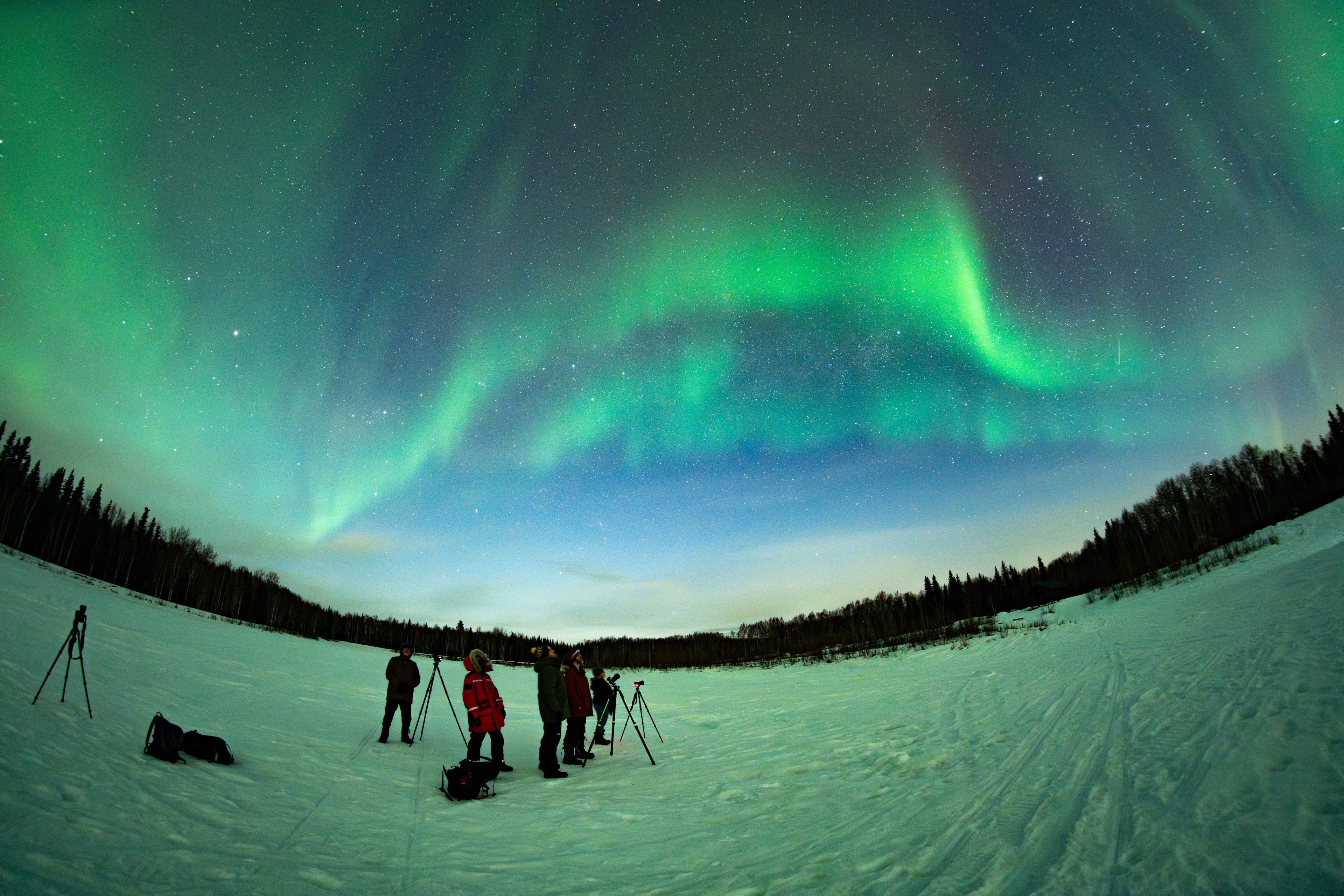
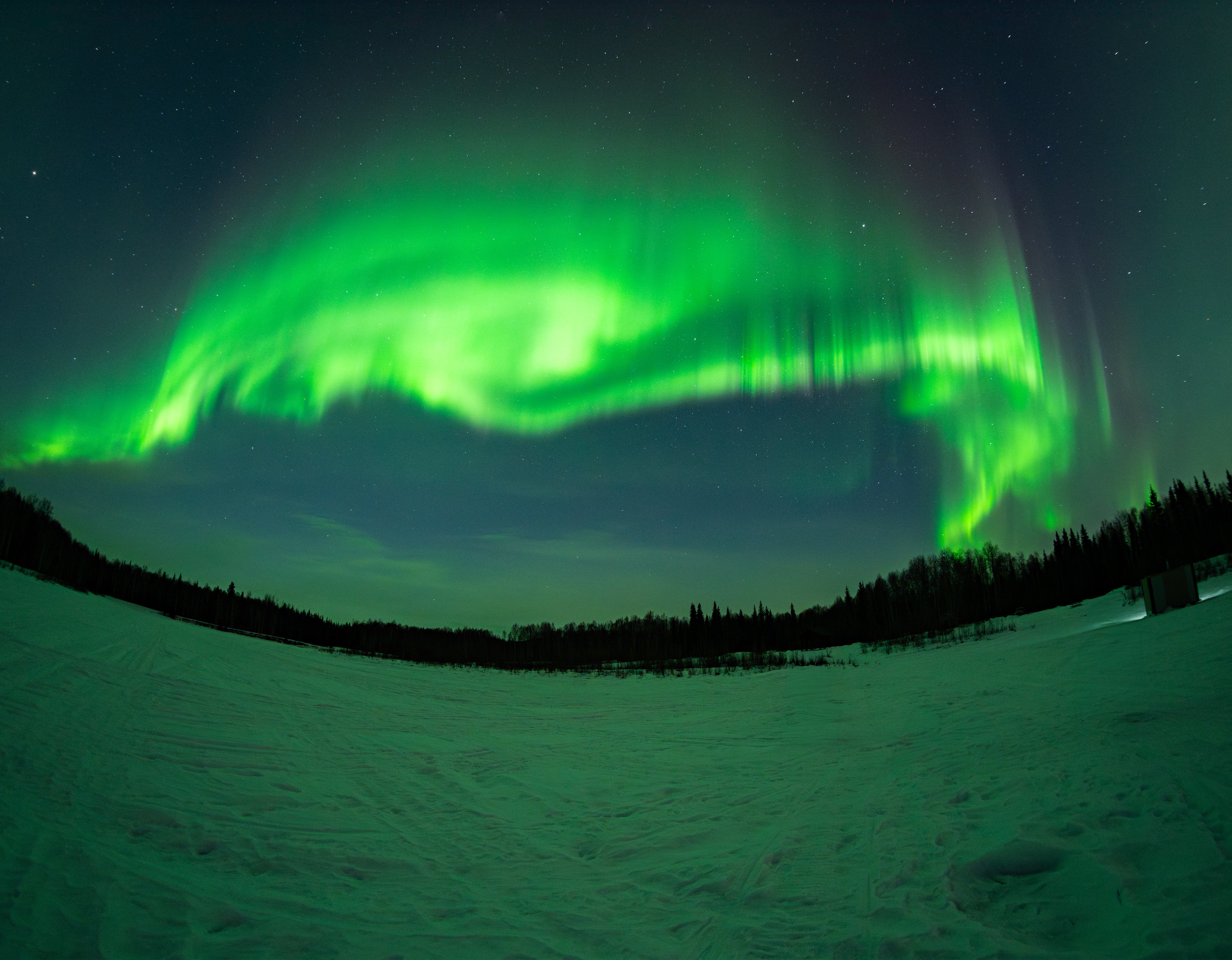

Witness the living skies of Alaska!

Highlights of the workshop
- While nothing is guaranteed in nature, we will use the best scientific tools and data available, combined with local knowledge plus a willingness to chase clear skies to give us excellent chances of photographing stunning auroral displays.
- Flightseeing opportunities available and included.
- Variety of landscapes (forests, mountains, river ways, and yes...snow).
- Wide variety of shooting locations available and scouted within a ~200 mile radius of Fairbanks, Alaska.
- Chance to learn a number of low-light and night sky shooting techniques across a variety of conditions.
- Small group post-processing instruction is included - you'll be able to develop your images from this workshop under expert instruction and 1-on-1 learning.
- Late-season shooting means many late nights, but lower chances of cloud cover.
- Maximum of 6 participants (3 per instructor) means individual attention and stronger camaraderie and collaboration with fellow photographers.
- Red Cross First Aid / CPR Certified; we also travel with Long-range radios, StarLink, and GPS emergency response beacons.
- Permitted and insured.
Meet your instructors
-

Vincent Ledvina (The Aurora Guy)
Vincent is a professional aurora photographer and Ph.D. student studying the aurora. Growing up in Maplewood, Minnesota, Vincent began chasing auroras when he was 16 years old. Receiving his B.S. Physics from the University of North Dakota in 2022, he brought his passion for aurora chasing to North Dakota and colloquially earned the name "The Aurora Guy." Now, he is studying the aurora as a Space Physics Ph.D. student at the University of Alaska Fairbanks (UAF) and running an aurora tour company. His work has been featured on Good Morning America, ABC World News, FOX Weather, The New York Times, The Washington Post, and more! Vincent specializes in aurora timelapse photography and real-time video. Combining technical and scientific expertise, Vincent has created stunning timelapse movies from his arctic adventures—he has spent months in northern locations such as Churchill, Manitoba, Venetie, Iceland, and Fort Yukon aurora chasing and perfecting his craft. Aside from photography, Vincent has extensive knowledge of how to predict the aurora and interpret space weather data. He is not only a student at UAF but also completing a graduate certificate in space weather science at Millersville University and serving on the White House's Space Weather Advisory Group, the only federal advisory committee focusing on space weather topics.
-

Marc Rassel
Marc is a landscape astrophotographer based in Central Minnesota, USA. Recently selected for the Milky Way Photographer of the Year – 7th Edition (2024) and Northern Lights Photographer of the Year – 8th Edition (2025), he is a photographer who focuses on the night sky and the wild landscapes that sit beneath it. Whether it’s an aurora storm over the Arctic, the Milky Way stretched across desert rock, a moonlit ridge line in the mountains, or the fleeting drama of a total solar eclipse, Marc is drawn to moments where natural light and land meet in powerful, often unpredictable ways. Over the years, he has traveled extensively in pursuit of these scenes, always aiming to capture what’s real, not just what looks good online. His goal is to create images that are clean, high-resolution, and grounded in the actual experience of being there. Coming from a background in photography and printmaking, Marc approaches every image with attention to both field technique and final presentation. He avoids the artificial look that dominates much of today’s digital work, prioritizing clarity, subtlety, and accuracy instead. More interested in results than hype, he shares what he learns so others can build on it rather than starting from scratch. Marc’s work has been featured by National Geographic, Forbes, The Weather Channel, EarthSky, DailyMail, DP Review, and more. He has also led photography workshops in a wide range of environments from remote deserts to icy mountain passes helping photographers refine their skills in real-world conditions. Ultimately, Marc is not interested in turning nature into spectacle. His goal is to photograph these places as they are – still, quiet, wild – and create images that hold up over time.


Teaching topics
This night photography workshop concentrates on the following teaching topics:
- Understand the the basic data and tools that help us determine the likelihood and strength of the Aurora
- Planning and composing your shots in the field and through the use of technology
- Getting oriented under the stars
- Proper camera and exposure settings for night sky photography
- Overview and usage of basic and advanced equipment
- Calculating appropriate exposure times and settings
- Understanding effective compositions
- Planning and shooting composite images for clear foreground and sky
- Focus-stacking (Shooting and processing)
- Low-level lighting techniques for foreground elements
- Shooting multiple exposures for image noise reduction
- Post-processing workflows
- Image editing in Adobe Lightroom and Photoshop
- Timelapse editing in LRTimelapse
The visibility of the Northern Lights is highly dependent on weather. Light to moderate cloud cover will not prohibit us from seeing and shooting the Aurora. If we encounter dense cloud cover, we may adjust the shooting locations and/or focus on landscape shooting and education.

Recommended Equipment
- Sturdy tripod with ball head
- Digital SLR and/or mirrorless camera body with full manual control, preferably full-frame sensor (although cropped / APS-C will work)
- Wide angle lens(es) with fast aperture (f/2.8 or better). Some great lenses for night sky photography include the Nikon 14-24mm f/2.8, Canon 16-35mm f/2.8L III, Rokinon 14mm f/2.8 (or 24mm), Tamron 15-30mm f/2.8
- Zoom of approximately 24-105mm
- If you have a telephoto (200mm+) and it’ll fit your travel plans, bring it along – you never know what we might find out in the field
- Polarizing filters if you have them
- Basic headlamp
- Remote shutter release or basic intervalometer
- Memory cards
- Extra batteries (at least 3 fully-charged batteries per night)
- Camera / lens cleaning supplies
- Laptop / Lightroom and Photoshop software + file transfer accessories if you’d like to follow along during post-processing sessions
- Hard drives and file backup accessories
If you don’t have everything you need, please contact me, I may be able to rent you the gear you need.
Packing List
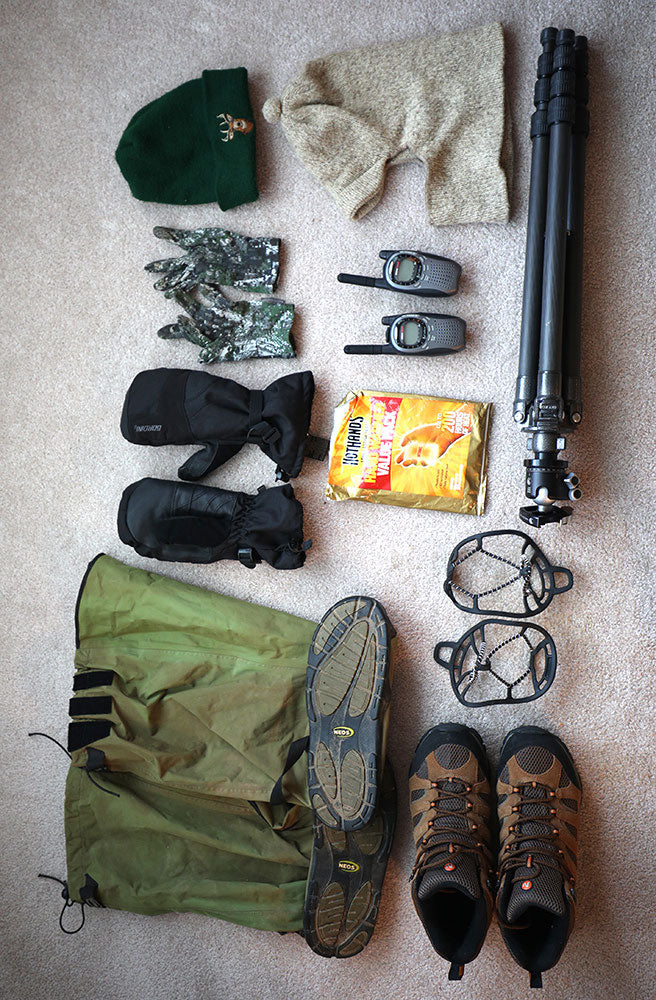
Layered, warm clothing (We are likely to experience a very cold, wide range of temperatures, potentially from -40°F to 40°F)
Warm base layers for legs and torso, gloves, hat, jacket, shirts, snow pants, wool socks, face mask / balaclava and footwear / snow boots suitable for extremely cold weather (Avoid cotton in favor of wool fibers whenever possible).
Water bottles / hydration packs. We will provide hand / foot warmers, and hot beverages as needed throughout the workshop.
Important Logistics
When we will the workshop, we will create a Facebook group for us to meet/chat before we all make it up to Fairbanks. Marc and I will create an itinerary a couple months before the workshop and confirm flight times and airport pickups.
Workshop Cost
There are two workshop periods. March 7-12 and March 14-19, 2027. Workshop investment will be around $4000 per person with some variations depending on the room booked in the cabin.