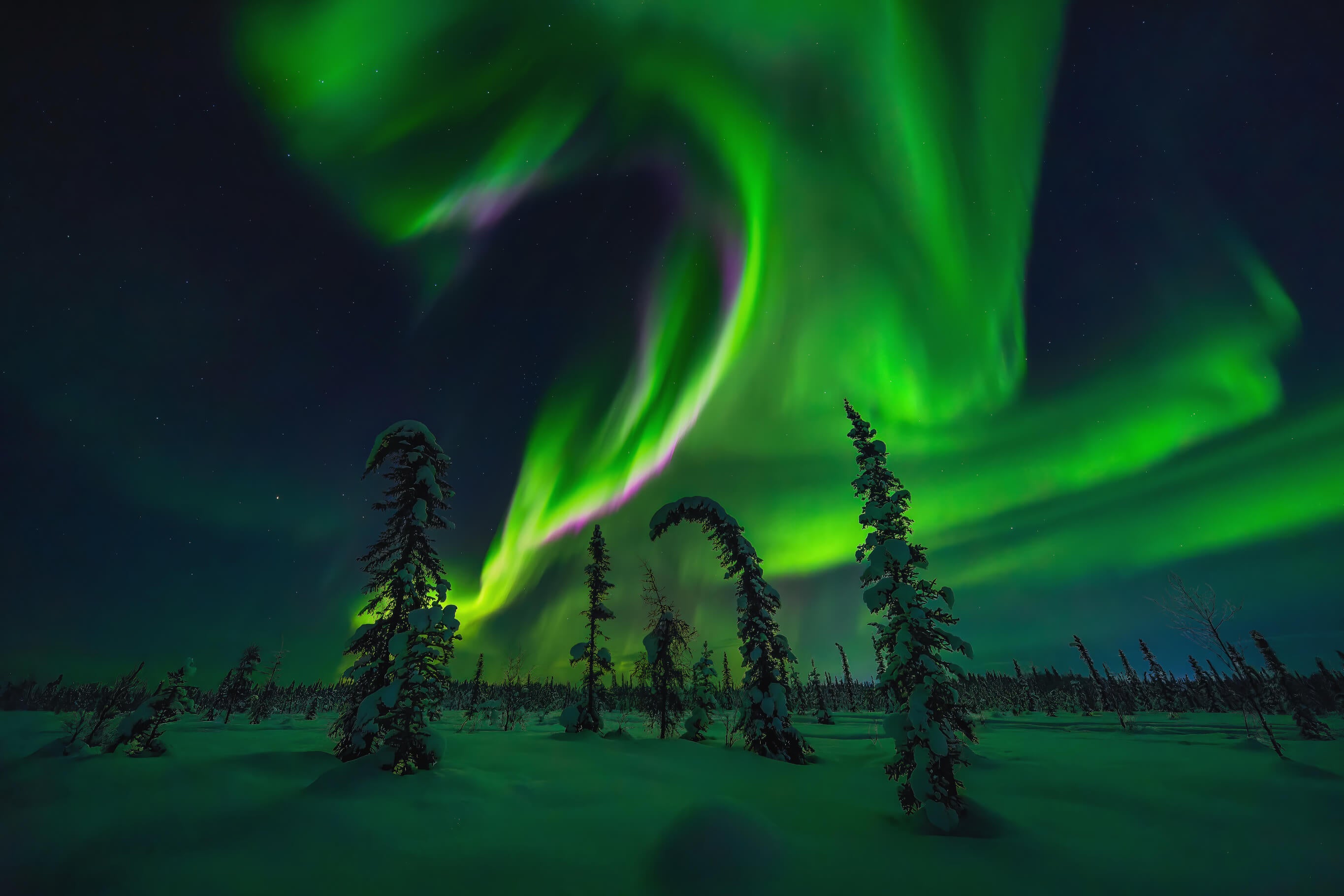
The truth about the aurora in Fairbanks...

The aurora can be seen in Fairbanks every night it's dark and clear, but...

often times, it's not as easy as you think. Not every night of aurora is created equal, and in the same night, the aurora goes through many different phases.

On a normal night in Fairbanks, the aurora only dances for around 15-30 minutes, so if you aren't in position at the right time, you could miss the best show.

Furthermore, most nights the aurora doesn't make any appearance until 8-9 pm with the best shows not until at least 11 pm - 12 am. This means staying up late is very important, but it's easier said than done.

If you don't know where to go, you might end up in an area with lots of light pollution or other people around, ruining the experience.

On cloudy nights, you may need to drive far out of town for clear skies and any chance of viewing the aurora.

There is more to aurora chasing in Fairbanks than many people think. It's easy to make mistakes that lead to missed shows, but with a few resources to help you make the right decisions, you can dramatically improve your chances.

A typical night of aurora looks like this...

Fairbanks sits underneath one of Earth's two auroral ovals where aurora can be seen every night.

Over the course of a night, the aurora goes cycles—the substorm cycle—that sees it build in strength and move south (growth; 1-3 hours), rapidly brighten and move north (expansion; 10-20 min), and gradually weaken and simmer until the next show (recovery; 1-3 hours).

The expansion phase contains active, "dancing" aurora which is bright with vivid colors, so it's important to be outside and ready when it happens.

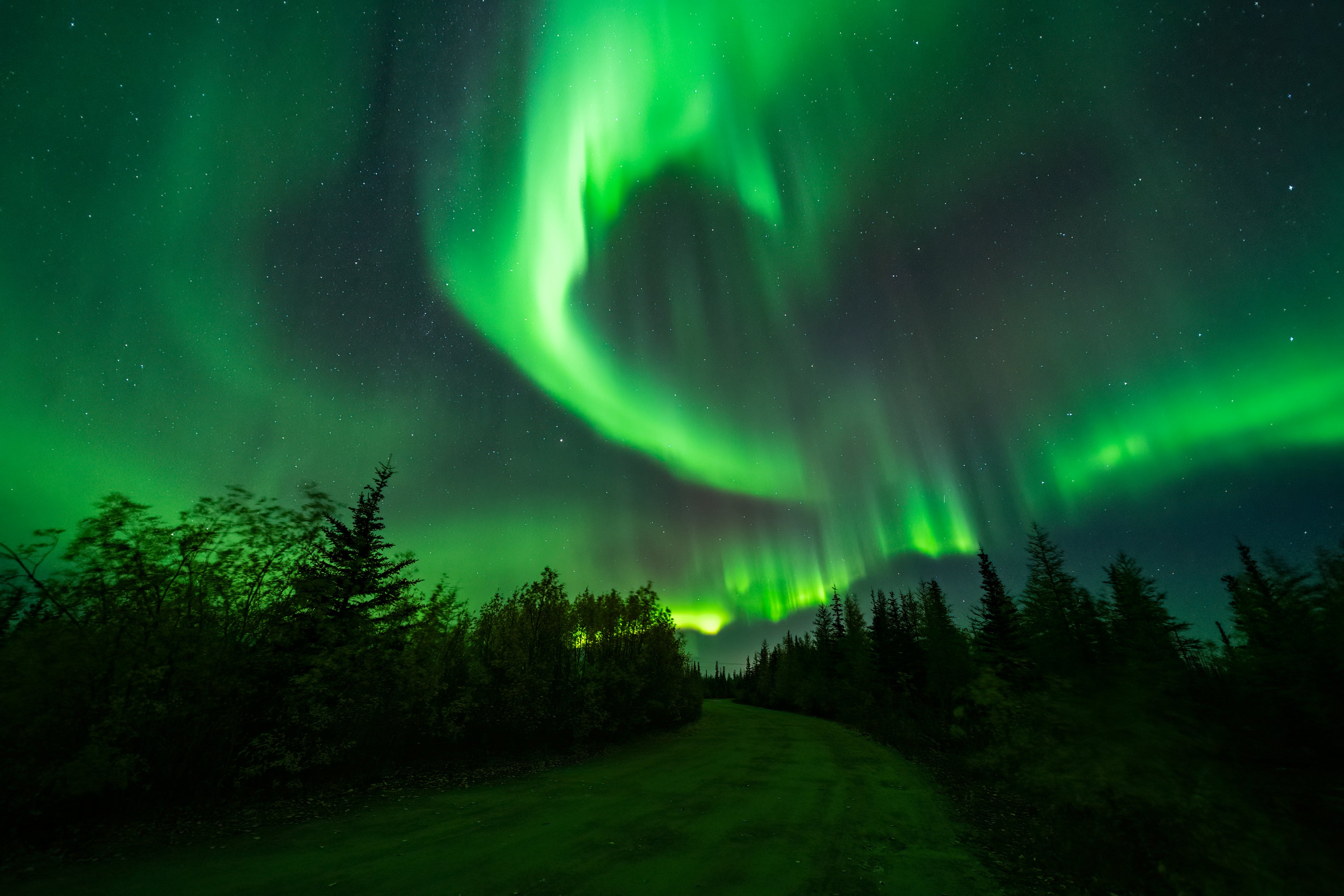
Along with the substorm cycle, every night Fairbanks rotates under the auroral oval reaching its widest point (aurora is overhead) around 1-2 am. This is the prime time for a substorm to create an overhead "corona" where the aurora looks like it's directly raining down on you.

Early in the night, the aurora usually appears low on the horizon to the northeast then gradually moves overhead. Towards the end of the night, the aurora often retreats to the northwest horizon.

Geomagnetic storms can create more substorms in a given night and cause the auroral ovals to expand to lower latitudes. This means the aurora may be mostly south of Fairbanks until an expansion phase when it moves overhead. Nights with higher geomagnetic activity also tend to have more red and purple-colored auroras.

Knowing the life cycle of the aurora is important for understanding what to expect when you chase the northern lights in Fairbanks.

Three key facts about chasing the aurora in Fairbanks, Alaska

I've seen the aurora hundreds of times in Alaska. Here are the top things you need to know:

  • You don't want to miss an auroral substorm. This is truly the highlight of a given night. If you are chasing on your own, learn how to recognize the patterns. Otherwise, hire a guide who knows the science so you can eliminate the guesswork.

  • Longer nights =/= more aurora. The aurora typically doesn't appear until 8-9 pm and for overhead displays until sometimes 2-3 am. Even during long, dark nights in December and January, the amount of aurora chasing hours stays the same.

  • You do not need to be in a specific place to see the aurora. Driving across town or even 50-100 miles (80-160 km) won't change how it appears. Bright displays can even be seen right in Fairbanks, but darker skies out of town will make fainter shows more visible.

  • Clear Skies

    The aurora occurs far above all terrestrial weather and clouds. While bright displays can be seen through thin clouds, you want as clear of skies as possible for the best viewing. The benefit of Fairbanks is the wide road network leading out of town which can unlock areas free of cloud cover. It's best to use webcams and cloud cover maps to determine a general direction to head once the sun sets. Mark a few locations so you can stop and check conditions. Paxson and Healy are two areas which are clearer than average due to how weather flows around the nearby mountains. For a complete list of my top spots, check out my e-book "My Top Aurora Chasing Locations Near Fairbanks, Alaska"

  • Auroral Activity

    You can see the aurora from Fairbanks every night, but it may barely be visible or dancing across the entire sky. In general, the northern lights start to appear around 9-10 pm in Fairbanks and grow higher in the sky until around 1-2 am. By this point, a substorm has likely already developed marking the high point for the night. In the morning hours, it's common for the aurora to take on a patchy and diffuse look. If you travel to Fairbanks, you don't want to see any aurora, you want to see the best display. This involves staying up late, finding a clear sky for that entire time, monitoring auroral activity, and a LOT of patience. Consider joining a dedicated aurora tour to maximize your chances and enjoy a more relaxing experience.

  • A Good Location

    During substorms, the aurora is bright enough to see from downtown Fairbanks, but there's something special about being in a dark place with no light pollution watching the aurora from horizon to horizon. If you're a photographer, having an interesting composition to pair with an auroral display is important. Thankfully, not far from Fairbanks are many aurora chasing locations that offer great viewing. The key is making sure you have locations in mind before heading out and better yet, scout these places in the daytime. If you don't have any daytime hours to spare or want to skip the search for prime aurora areas, check out my e-book "My Top Aurora Chasing Locations Near Fairbanks, Alaska" to see where I usually go.

1 of 3

True or False? Test your Alaska Aurora Chasing Knowledge

The colder it is, the stronger the aurora.

False! The aurora does not care about the temperature on the ground. It takes place hundreds of miles in the sky. Aurora season begins in late August and lasts until late April in Fairbanks.

You won't see aurora if the Kp is low.

False! The Kp index is a measure of the global geomagnetic activity and is not specific enough to track disturbances over "small" areas like the state of Alaska. It is also a measure of mid-latitude activity instead of what's happening in the auroral ovals, and it reports evert three hours, so it misses short yet intense bursts of aurora seen during substorms.

Using Kp to infer what’s happening over Alaska is like using downtown traffic sensors, combined into one “city traffic” number that updates every few hours, to guess how crowded the airport roads are. The airport is usually busy at least a little—just like the auroral oval usually has some aurora—so the real question is when it suddenly gets much worse. Often the two rise and fall together, but the airport can lock up from a local bottleneck even when downtown looks fine, and short, intense backups can come and go between updates without showing up in the downtown average.

March is on average the clearest month in Fairbanks.

True! March is the most popular month to see the aurora for this reason plus the added help from the Russell-McPherron effect which creates more auroral activity around the equinoxes.

However, there isn't a "bad" month to see the aurora. The fall season (late August-early October) is great for warm temperatures and wider access to aurora chaasing locations that aren't plowed in the winter.

The cold and dark months from November to February are great for winter activities like dogsledding, snowmachining, and skiing. If you're after snowy winter scenes for photography, this is also a great time.

The equinoxes have the brightest auroras.

True (kind of). It is true that the months of September and October as well as March and April have a higher number of substorms, or bursts of auroral activity. This is called the Russell-McPherron (R-M) effect. However, the exact equinox dates themselves have little significance.

That's because this effect gradually waxes and wanes over the course of many days, so there is effectively zero difference between how the R-M effect acts from e.g., March 21 to March 22. If you want to travel over the exact equinox dates, that's fine, but don't expect there to be amazing auroras because you timed it exactly.

Chena Hot Springs is a good spot to see the aurora.

False! Chena Hot Springs is one of my recommended activities if you visit Fairbanks, but it is not a great place to see the aurora for a few key reasons:

  • First, the hot springs are at the end of a long, east-west road which is inconveinent. If you make Chena Hot Springs Resort (Chena) your "home base" for aurora chasing, you will have to drive an hour west just to get to another road to go north or south. This is an issue if you need to get to a clear patch of sky in say, Delta Junction. Staying at Chena would add an extra 2-3 hours of drive time to that chase vs staying in Fairbanks.

  • Second, many pulloffs on the road to Chena are not plowed in the winter, and even in the fall none of the pullouts have very clear views of the horizon ideal for photography.

  • Third, the road to Chena (at least in my experience) is one of the last "major" roads to get plowed in the winter. Every time I drive that road after around mid-October is a stressful experience.

You need to stay up until midnight to see the aurora.

True (kind of). This is one of those "technically..." statements because on a night of strong geomagnetic activity it is likely you will see a substorm earlier than midnight, perhaps around 10-11 pm. As a reminder, most substorms occur around 1-3 am in Fairbanks.

But, since strong geomagnetic activity can't be guaranteed during your trip it's safe to plan at least staying up until midnight while you're chasing the aurora in Fairbanks.

You can see aurora if there is 100% cloud cover.

True! Not only can you see bright aurora through thin cloud cover which is technically blanketing the entire sky, but a prediction of 100% cloud cover can always lean the opposite way.

Many times in Fairbanks will you find the cloud cover forecasts to be unreliable. That is why I tell visitors to relax about weather models and concentrate on what's in control when planning a trip: accommodations, tours, education, and daytime activities.

How to maximize your chances

Seeing the aurora in Fairbanks is never guaranteed, but there are a few things you can do to maximize your success:

  • Choose the right accommodations. Going out on your own or booking a tour will give you more freedom to move if cloud cover becomes an issue, but it's nice to have the option to stay in and enjoy the aurora from a picturesque area without the city lights becoming a distraction. I have an entire page on my website dedicated to lodging in Fairbanks.

  • Adjust your sleep schedule. The best auroral displays typically don't occur until late at night. Don't schedule too much in the mornings so you can go to bed later and enjoy better shows. If you book an aurora tour, this is not as important since you can sleep in the vehicle or while waiting for the aurora to grow stronger.

  • Plan your trip with aurora chasing in mind. Visit my page on trip planning for more information, but if your goal is aurora chasing, make sure to visit Fairbanks at the right time of the year, book enough nights for a chance of clear skies, secure an aurora tour, and conside the moon phase when choosing dates.

My favorite aurora chasing resources to use in Fairbanks
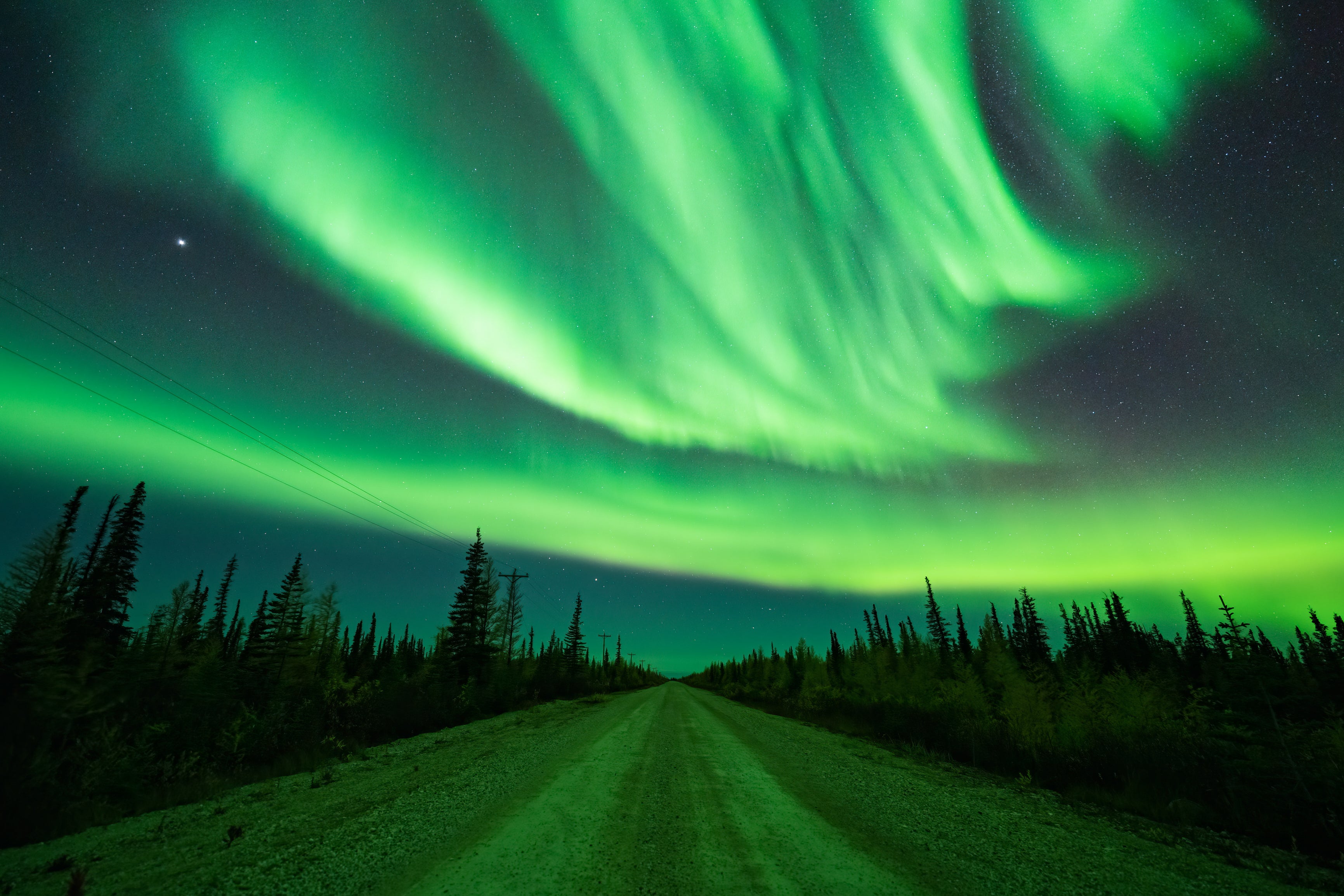
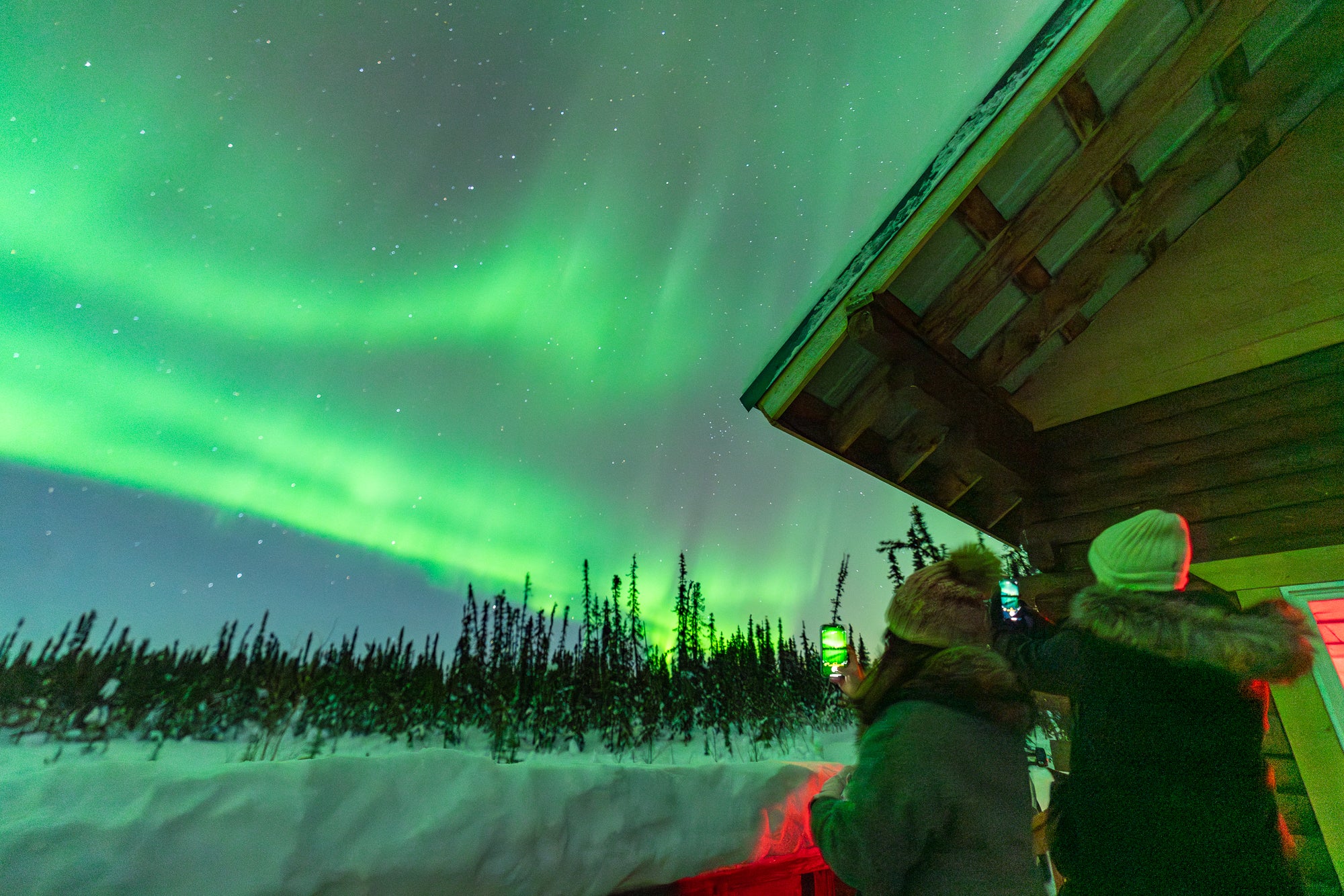
There are many aurora webcams in and around Fairbanks you can ue to track cloud cover and auroral activity. Regardless of what is happening with space weather data, having a live view of what the aurora is really doing will always be the most helpful.

The GOES Magnetometers (Mag) are a pair of instruments in space that can give you a heads up when energy is building in the aurora and when it is being released. This is the number one space weather data stream I use to track auroral activity. If you don't know about GOES Mag and are still learning about the science of the aurora, I suggest you download my free aurora chasing e-book. When you sign up, you will also receive my aurora alerts which I send out whenever there is a high chance of geomagnetic activity in coming days.

1 of 4

Have any questions about the aurora?